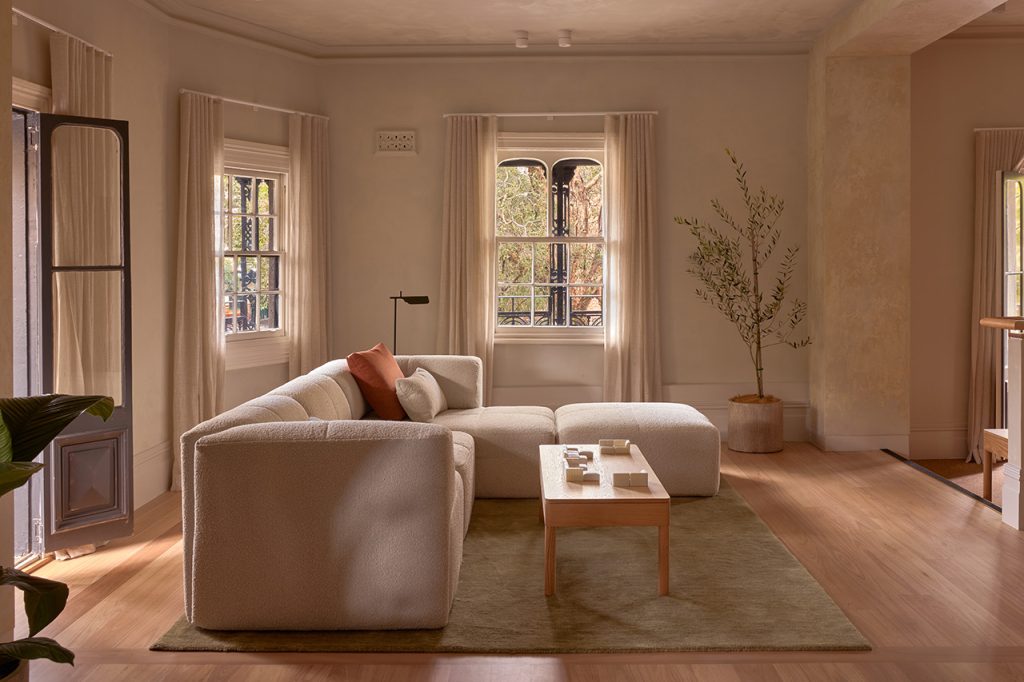
Hotel refurbishments in Australia: How to increase revenue without closing your doors.
TL;DR
Hotel refurbishments across Australia help keep brands competitive and deliver a strong return on investment (ROI) by enhancing the guest experience and creating operational efficiencies. Investing in upgrades can improve the occupancy rate, increase the average daily rate (ADR) and elevate the overall guest experience. Hotel owners and operators should partner with a fitout company with extensive experience working in live environments, deep hotel industry knowledge, and a focus on transparent communication. Unita has worked with major local and international hotel brands to drive revenue growth while maintaining business continuity throughout the works.
How can hotel refurbishments increase revenue?
Hotel refurbishments can increase revenue by boosting occupancy rates and ADRs, while creating new opportunities to drive sales through enhanced amenities and services. They also strengthen brand perception, create competitive advantage, and attract and widen target markets.
What trends are affecting hotel stays?
A recent survey of conducted by Corporate Traveller demonstrated that Australian business travellers are extending their stays to incorporate leisure time, leading to an $11 billion surge in spending for this blended type of travel. This has led to demand for better-equipped and larger workspaces in their room, with 35% of respondents saying this was a priority. Hotel refurbishments should focus on incorporating workspaces, meeting room facilities and thoughtfully designed, technology-enabled amenities to meet the demand of this growing market.
Why are hotel refurbishments so important right now?
Owners and operators aren’t using refurbishments just to save money or update a space anymore; they’re using it as a strategic business decision to respond to a rapidly changing market. Rather than starting from scratch, owners are finding opportunities to reposition assets, extend their lifespan and create value from spaces that may no longer meet current market needs.
Hotel refurbishments also play an increasingly important role in helping brands remain competitive amongst Australia’s resurging tourism market and to meet international visitor expectations. International visitor arrivals are forecast to reach 10.9 million by 2030, with the associated spend predicted to reach $46 billion. Hotel owners must meet tourist expectations of enhanced wellness and workspace facilities, authentic and sustainable design and premium local dining.
How do you refurbish a hotel while guests are still staying there?
Refurbishing a hotel while guests remain onsite requires careful coordination, multi-phased programmes, noise and dust control, and operational adjustments such as temporarily relocating amenities. Hotel refurbishments should be scheduled during the low season, with works staged in isolated sections to minimise disruption to guests. Empty floors surrounding active work zones can be used as buffers, while measures such as acoustic baffling, visual barriers and strict health and safety protocols help reduce exposure to noise and dust are essential. Providing temporary facilities while original spaces are closed can also help maintain business continuity and protect the guest experience.
What are the biggest challenges in live hotel refurbishments?
In a live hotel environment, delivering a quality fitout is only one part of the equation. Maintaining safety, minimising disruption and protecting the customer experience are just as critical as the build itself. The Unita team stages works around operational requirements, coordinating after-hours access, managing noise and dust constraints, and maintaining clear communication with stakeholders throughout delivery. Our team develops detailed staging and logistics plans early, coordinates closely with venue operators and facilities teams, and identify high-risk activities before they affect operations. This proactive approach creates a more controlled delivery process with fewer disruptions, faster decision-making and stronger outcomes for both clients and end users.
What makes a successful hotel fitout partner?
The most successful hotel fitout companies collaborate with clients, designers and contractors to align aesthetics with function, solve problems fast and make decisions that deliver comfort, consistency and commercial return. They bring extensive experience delivering projectsin a live environment and prioritise programme certainty. They will also understand how to maximise return on investment (ROI) while minimising downtime, keep projects on budget, and strengthen the long-term market position of the asset.
Why does Unita’s approach to hotel refurbishments work?
Unita has delivered accommodation projects for brands including Mercure, Rendezvous, Kimpton Margot and Eden Health Retreat while maintaining live operations throughout construction. Our team combines deep industry knowledge, transparent communication and a thorough quality control process. Unita works closely with venue operators and facilities teams to minimise disruption to business operations while delivering detailed project plans that map every phase.
Our work at Point Hotel in Brisbane demonstrates how thoughtful planning can turn construction into an operational advantage. While we built the new kitchen, we installed a temporary kitchen on an upper floor to keep the hotel operating without interruption. The temporary setup improved room service so significantly that the hotel chose to retain a second kitchen as a permanent feature.
Which hotel and accommodation brands have Unita worked with?
- Mercure Spring Hill – refurbished function rooms, the conference centre, lobby and foyer, and completed a staged upgrade of every guest room.
- Kimpton Margot – upgraded 180 guest rooms and delivered heritage works to the main lobby.
- Rendezvous Hotel Scarborough– transformed 330 guest rooms across 14 levels.
- The Point Hotel Brisbane – upgraded the kitchen, refurbished the dining room and bar, completed landscaping works, and delivered a new gym.
- Garde Hotel Fremantle – delivered the hotel lobby and meeting room, completed the restaurant and bar fitout, and installed joinery across 83 apartments.
- Eden Health Retreat – constructed 12 luxury cabins, a yoga pavilion, a high-end commercial kitchen and dining precinct, and completed civil works, site power and water upgrades.
Key Takeaways
- There is the opportunity for a major ROI when hotel owners and operators take on refurbishments to enhance guest experience.
- The Unita team is experienced in staging works around operational requirements, coordinating after-hours access, managing noise and dust constraints, and maintaining clear communication with stakeholders throughout delivery.
If you’re looking at bringing your medical or gym fitout to life, let’s chat.
Frequently Asked Questions
Can a hotel remain open during refurbishment works?
Yes, a hotel can remain open during refurbishment works if the works are scheduled in low-season and you partner with a builder that has extensive experience driving business continuity and working within a live operational environment. Unita is a builder with deep industry knowledge that works closely with hotel staff to align hotel operations and guest experience with the refurbishment programme.
How long does a hotel refurbishment take?
The length of time a hotel refurbishment can take varies between 2-24 months. The timeline depends on the scope of work and engaging early with your fitout partner. Once a desired timeframe has been selected, Unita works to stabilise schedules, mitigate risks and keep stakeholders aligned from the start to ensure projects are delivered on time and budget.
What return on investment can a hotel refurbishment achieve?
There are significant measurable improvements after a hotel refurbishment. Unita refurbished the ballroom at the historic Rendezvous Hotel in Melbourne and the number of weddings booked within the first year of operation increased 35-fold. There are other cases where a 150-200 room hotel saw a 14.5% increase in revenue after two years following a substantial renovation. Hotel owners and operators can maximise the potential for significant improvements on hotel ROI by focusing on areas that drive operation efficiency and improve guest experience.
What areas of a hotel should be prioritised first?
The hotel areas that should be prioritised first for refurbishment are public areas that influence the hotel’s first impressions, then guest rooms, essential infrastructure like HVAC and plumbing, and then amenities that drive additional revenue like gyms, restaurants, bars and lounges.