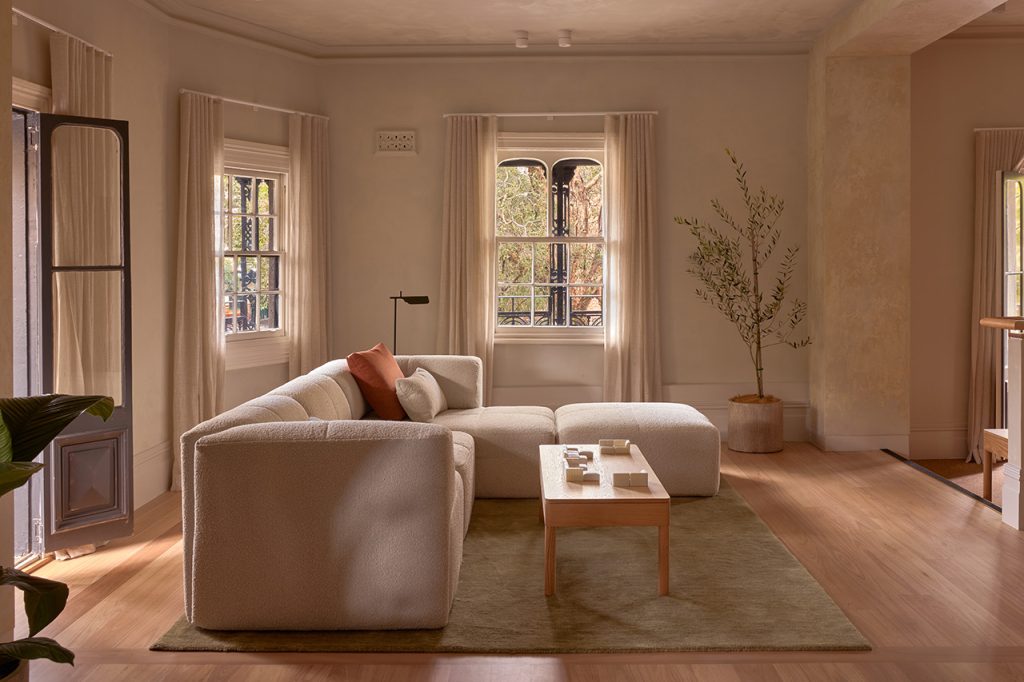
Designing for moments of pause and reconnection with Tracy Zorich from Studio Traces.
In a time when connection feels disrupted, layering details with purpose can create lasting deep emotional resonance between a person and space. Designing environments that sustain a sense of presence and reconnection is more important now than ever and interior designers are shifting to creating spaces that encourage reflection and empower people to co-create their own emotional experiences.
Tracy Zorich, Creative Director and Interior Designer at Studio Traces, celebrates day-to-day rituals through considered, functional design. Her practice is an antidote to our increasing sense of disconnection, bringing introspection and curiosity into the everyday. We spoke with Tracy about her design process, how the human experience informs her work, and why she designs for the subtle spaces between moments of hustle to bring people back to themselves.
Building emotional resonance
Experiential design turns a space into a story, with each design decision supporting an intended psychological experience. Tracy’s work takes visitors on an emotional journey, with sensorial touchpoints and tactile finishes that encourage moments of calm and inward reflection.
Reflecting on her work with a leading bathhouse in Perth, she says, “The space is almost forcing you to stop, slow down and have a quiet moment, which I feel is something that is becoming harder to achieve in day-to-day life.” By manipulating light, texture and space, Tracy creates a feeling of emotional safety. Beyond creating a memorable experience, the space offers guests a moment of refuge from the pace of every day.
Tracy’s work also reinforces the idea that humans feel most connected to a space when their environment responds to their needs and behaviour . She says, “The way the sunlight filters through a café and creates a warm spot to sit and have your coffee – that is a space creating presence.” In this context, light is a powerful emotive tool used to create a feeling of belonging, comfort and repose, reconnecting the visitor to the present moment.
Designing for pause
The “in-between” moments have just as much potential for helping us feel present as active experiences – if not more. An ancient Chinese proverb says, “We shape clay into a pot, but it is the emptiness inside that holds whatever we want.” Tracy suggests that it is, in fact, curiosity that fills this emptiness and acts as the key factor to optimising a design in the space between moments.
She says, “When I go for a bushwalk, I will often stop at a beautiful rock and want to touch it, or I’ll see a beautiful tree and notice the way the light is hitting it. Those things create a little moment of pause and thoughtful contemplation.”
Moments of curiosity like this can be deliberately crafted by manipulating spatial elements, light or texture by design. She elaborates, “These sorts of things physically influence you to have those experiences of respite, transition and meaning.” In this way, a moment that initially seems empty can come alive.
Reconnecting through design
Interior design has shifted. Where once the focus was on a combination of aesthetics and practicality, there is now an emphasis on reconnecting people with themselves and encouraging them to see the beauty in moments of pause.
Tracy’s work at Studio Traces cultivates connection and emotion by creating moments of interaction within the space using light, shadow, materiality and form. Her work shows that when small details are layered with purpose, they become deeply human.
You can see more of Studio Traces here.
Whether you’re a designer interested in being featured in Designer Spotlight or a looking for innovative design and fitout solutions to level up your business, we’d love to hear from you. Get in touch.